 0300-5008536
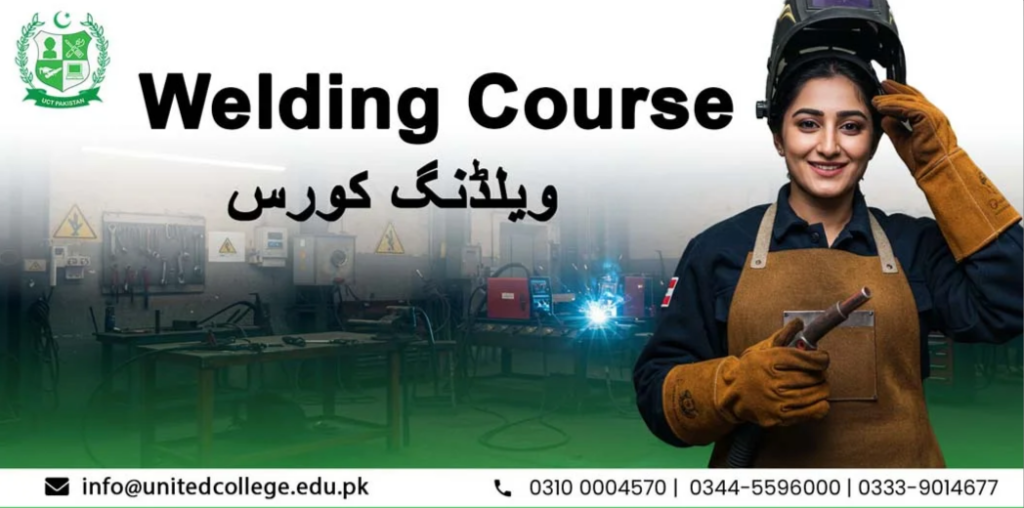
A Profession That Connects Industries
Welding is an essential part of many industries because it helps create strong and durable metal structures. From buildings and pipelines to machinery and industrial equipment, welding is used in projects that support economic growth and development. This is why trained welding professionals continue to be needed in both Pakistan and Gulf countries.
A welding diploma provides practical training and technical knowledge that can help individuals enter a wide range of industrial sectors. With industries constantly expanding, diploma holders can explore numerous career opportunities locally and internationally.
Growing Demand for Welding Professionals in Pakistan
Pakistan’s industrial sector continues to create opportunities for technical workers. Welding professionals are required in both public and private projects where metal fabrication and structural work are involved.
Steel Fabrication Industry
Many workshops and fabrication units require trained workers to manufacture gates, steel frames, sheds, and industrial structures.
Industrial Plants
Factories and production facilities often hire welding professionals for machinery installation, maintenance, and repair work.
Construction Projects
Residential buildings, commercial plazas, warehouses, and infrastructure projects regularly require welding services during construction.
Mechanical Engineering Sector
Engineering companies use welding in manufacturing and maintenance operations, creating additional opportunities for diploma holders.
Why Gulf Countries Need Skilled Welders
The Gulf region is known for large-scale development projects and industrial investments. Because of this, welding professionals are often required in various sectors.
Building and Infrastructure Projects
Modern cities, commercial towers, transportation systems, and industrial facilities require extensive metalwork and structural welding.
Oil and Energy Sector
The Gulf’s energy industry depends on pipelines, processing plants, and storage facilities that require skilled welding professionals for fabrication and maintenance.
Manufacturing Facilities
Industrial factories use welding for equipment production, assembly operations, and maintenance tasks.
Marine and Offshore Industries
Some Gulf countries also offer opportunities in ship repair, marine construction, and offshore industrial projects where welding expertise is important.
Advantages of Holding a Welding Diploma
A welding diploma can provide several benefits when entering the job market.
Technical Knowledge
Formal training helps individuals understand welding processes, equipment handling, and industry requirements.
Better Employment Opportunities
Many employers prefer candidates who have completed technical training because they are more familiar with professional work environments.
Increased Workplace Confidence
Practical experience gained during training helps individuals perform tasks more effectively and confidently.
Career Development
A diploma can serve as a foundation for future growth and specialization within industrial sectors.
Skills That Employers Value
Companies often look for welding professionals who possess practical abilities and professional attitudes.
- Attention to detail
- Accuracy in work
- Safety awareness
- Problem-solving ability
These qualities can help individuals perform effectively in industrial environments.
Career Paths After a Welding Diploma
A welding diploma can lead to different employment opportunities depending on industry requirements.
- Fabrication Worker
- Structural Welder
- Industrial Technician
- Maintenance Assistant
- Production Worker
These positions can be found in construction companies, engineering firms, manufacturing plants, and industrial facilities.
Opportunities for Professional Growth
The welding profession offers opportunities to gain experience and move into more advanced roles over time. Individuals who continue improving their technical abilities may qualify for positions involving supervision, quality control, or project coordination.
Continuous learning can help professionals remain competitive and increase their value in the workplace.
The Importance of Welding in Modern Development
Many important projects depend on welding for their success. Bridges, factories, pipelines, machinery, transportation systems, and industrial plants all require skilled welding work.
As countries continue investing in development and infrastructure, welding remains a profession that contributes directly to progress and economic growth.
Final thought
A welding diploma can open the door to opportunities in Pakistan and Gulf countries by providing the practical knowledge needed in today’s industrial world. From construction and manufacturing to energy and engineering sectors, welding professionals play an important role in building and maintaining essential structures and equipment. With demand across multiple industries, a welding diploma remains a valuable qualification for individuals seeking a stable and rewarding technical career.
Here is our free guest post where we share valuable information about professional training courses and career development:
https://dwayne-johnson.mn.co/posts/103565023?utm_source=manual
https://taggedface.com/posts/77957
https://exploring-wellness-workshop.mn.co/posts/103568943?utm_source=manual
https://jonathan-trellis-simmer.mn.co/posts/103579593?utm_source=manual