 0300-5008536
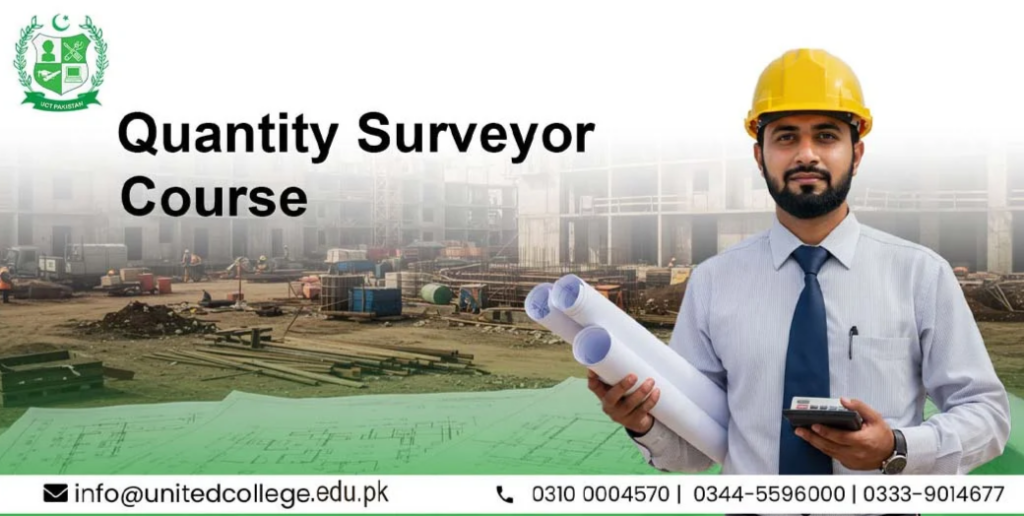
Building the Right Skills for Quantity Surveying
Becoming a successful quantity surveyor requires a combination of technical knowledge, numerical ability, construction understanding, and professional communication. Quantity surveyors are involved in important areas of construction projects, including measuring quantities, preparing cost estimates, managing budgets, reviewing contracts, and monitoring expenses. Because their work connects construction activities with financial planning, they need to understand both technical details and project costs.
Students and beginners interested in this field can develop these skills through education, practical training, construction exercises, and experience with modern digital tools. A strong foundation can help learners understand how construction projects are planned and how costs are calculated and controlled. As the construction industry becomes more technology-driven, knowledge of tools such as BIM and digital estimating systems can also become useful.
1. Construction Drawing Skills
A quantity surveyor needs to understand construction drawings because measurements and cost calculations often depend on information shown in plans and technical documents.
Important abilities include:
- Reading floor plans and elevations
- Understanding dimensions and scales
- Identifying construction components
- Interpreting sections and details
- Extracting measurement information
Good drawing-reading skills can help reduce errors during quantity calculations.
2. Quantity Measurement Skills
Accurate measurement is one of the core responsibilities of quantity surveying. Professionals need to calculate the quantities of materials and construction work required for a project.
Students can practice measuring items such as concrete, brickwork, steel, plastering, flooring, excavation, and painting.
3. Cost Estimation
Cost estimation is another essential skill. Quantity surveyors need to understand how quantities, material prices, labor costs, equipment, and other expenses contribute to the overall project budget.
A good understanding of estimation helps professionals prepare organized and realistic project cost information.
4. Numerical and Analytical Skills
Quantity surveying involves working with numbers and large amounts of project information. Strong numerical and analytical skills can help professionals check calculations, compare costs, identify differences, and evaluate project information.
Attention to detail is particularly important because small measurement or calculation errors can affect project costs.
5. Bill of Quantities (BOQ) Knowledge
Quantity surveyors often work with Bills of Quantities. Understanding how to prepare, organize, and review BOQs is an important technical skill.
A properly structured BOQ can provide clear information about construction work, quantities, units, and pricing.
6. Contract Knowledge
Basic knowledge of construction contracts can help quantity surveyors understand payment procedures, variations, responsibilities, and contractual requirements.
Professionals may also need to review documents and support financial discussions between clients, contractors, and other project stakeholders.
7. Cost Control Skills
Quantity surveyors help monitor construction costs throughout a project. They compare planned budgets with actual expenditure and review changes that may affect the final cost.
Useful cost-control abilities include:
- Monitoring project expenses
- Assessing variations
- Tracking material costs
- Preparing financial reports
- Reviewing budget differences
8. Communication and Teamwork
Quantity surveyors work with architects, engineers, contractors, suppliers, clients, and project managers. Clear communication and teamwork are therefore important.
Professionals should be able to explain measurements, estimates, cost reports, and project changes in a clear and professional manner.
9. Technology and BIM Skills
Modern construction uses digital technology for planning, measurement, and project management. Quantity surveyors can benefit from knowledge of spreadsheets, digital drawings, estimating software, and Building Information Modeling (BIM).
Technology skills can support faster quantity takeoff, better data organization, and more efficient cost management.
Developing a Strong Quantity Surveying Skill Set
A successful quantity surveyor needs more than numerical knowledge. Construction drawing interpretation, quantity measurement, cost estimation, BOQ preparation, contract awareness, cost control, communication, and technology skills all contribute to professional development. Students can gradually build these abilities through structured learning and practical exercises, creating a strong foundation for a career in quantity surveying and construction management.
Here is our free guest post where we share valuable information about professional training courses and career development:
https://bookshop.org/wishlists/b38eaeb3a36879bae8cacfb27a452d0d041cc476