 0300-5008536
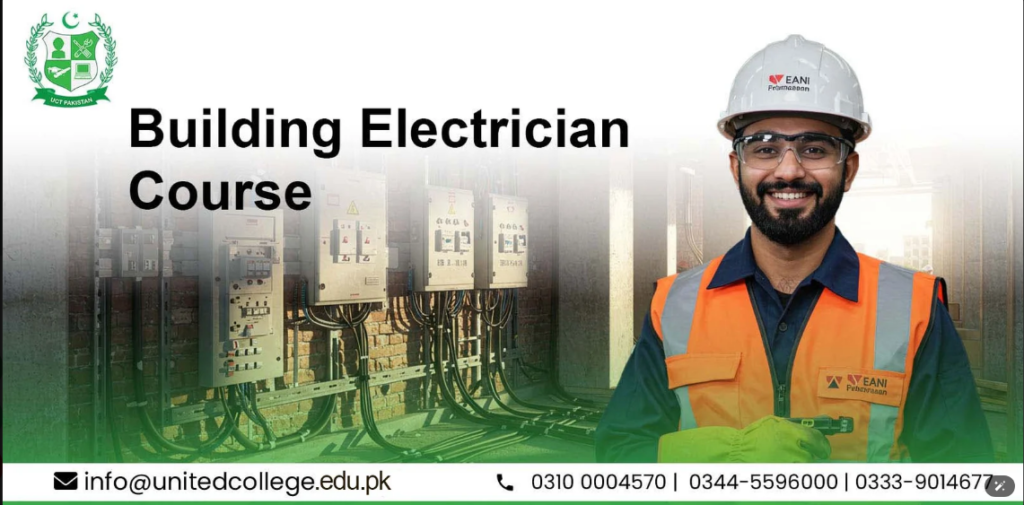
Turn Technical Knowledge into Practical Experience
Building electrician training is designed for individuals seeking to develop practical electrical skills and prepare for a successful career in construction and electrical fields. Modern buildings require safe, efficient, and well-planned electrical systems, creating a continuous demand for trained electricians. A professional training program focuses on real-world applications, allowing students to gain experience with electrical installations, maintenance, and troubleshooting before entering the workforce.
Unlike theory-based learning, building electrician training emphasizes workshop practice, enabling students to perform electrical tasks using professional equipment and industry-standard techniques.
Build a Strong Foundation in Electrical Fundamentals
Every successful electrician begins by understanding the basic principles of electricity. Students first learn about electrical current, voltage, resistance, electrical circuits, power calculations, and safety regulations. These concepts help learners understand how electrical systems function and prepare them for practical workshop activities.
A solid understanding of electrical fundamentals makes it easier to perform installations correctly and diagnose electrical problems efficiently.
Distribution Board (DB) Installation with Practical Training
The Distribution Board (DB) is one of the most important components of a building’s electrical system because it safely distributes electricity to different circuits.
Students receive practical training on DB installation by assembling complete distribution boards in the workshop. They learn how to install MCBs, connect incoming and outgoing circuits, arrange electrical wiring inside the panel, identify different breakers, and perform testing before supplying power.
Hands-On House Wiring Practical Sessions
House wiring is a major part of training for building electricians. Instead of simply learning wiring diagrams, students complete full practical wiring exercises under instructor supervision.
Training includes installing lighting circuits, ceiling fan wiring, switches, sockets, junction boxes, PVC conduit systems, and electrical cables. Students also learn concealed wiring and surface wiring techniques commonly used in modern buildings.
Learn to Work with Professional Electrical Tools
A skilled electrician must know how to handle electrical tools safely and correctly. Throughout the course, students work with professional tools used in daily electrical installations.
They receive practical training using digital multimeters, insulation testers, test lamps, wire strippers, cable cutters, crimping tools, combination pliers, long-nose pliers, electric drills, screwdrivers, and measuring instruments.
Electrical Fault Finding Through Real Practical Exercises
Finding and repairing electrical faults is an essential skill that every electrician must master. During practical training, students work on demonstration boards and live practice panels where they diagnose common electrical faults.
They learn how to identify short circuits, loose connections, overloaded circuits, damaged cables, faulty switches, and lighting problems. Students also perform continuity testing, insulation testing, voltage measurements, and repair procedures using professional testing equipment.
Electrical Safety and Earthing Practice
Working safely is one of the most important responsibilities of every electrician. Throughout the training, students learn proper earthing methods, electrical protection systems, and workplace safety procedures.
Practical sessions include installing earthing systems, testing grounding resistance, using personal protective equipment (PPE), and following safe isolation procedures before working on electrical circuits.
Practical Skills Students Gain During Training
By the end of the course, students have developed practical experience in several essential areas of electrical work, including:
- Electrical fundamentals
- Distribution Board (DB) installation
- House wiring practical training
- Electrical wiring techniques
- Electrical tool handling
Build a Career with Practical Electrical Expertise
Building electrician training provides much more than classroom education. It develops practical experience, technical confidence, and professional skills through continuous workshop activities. Students graduate with the ability to install distribution boards, complete house wiring, use electrical tools correctly, troubleshoot faults, and follow industry safety standards.
With increasing demand for qualified electricians in residential, commercial, and industrial sectors, practical electrical training provides a strong foundation for a stable and rewarding technical career. By mastering real-world electrical skills, graduates are ready to contribute confidently to modern construction and infrastructure projects.
Here is our free guest post where we share valuable information about professional training courses and career development:
https://global-galactic-archives.mn.co/posts/104035836?utm_source=manual
https://socialytime.com/posts/169190
https://webziainfotech.mn.co/posts/104034628?utm_source=manual