 0300-5008536

The Changing Landscape of Automotive Technology
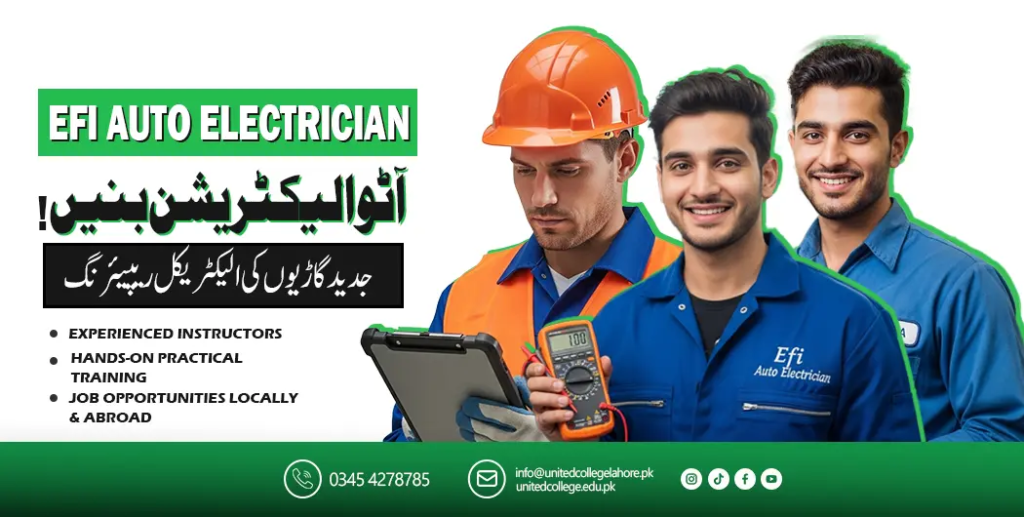
The automotive industry is changing as electric vehicles (EVs) become an important part of modern transportation. Unlike conventional vehicles that mainly depend on petrol or diesel engines, electric vehicles use battery packs, electric motors, electronic controllers, and advanced electrical systems. These changes are creating new learning opportunities for students interested in automotive technology. An auto electrician course in Lahore can help beginners develop foundational knowledge of vehicle electrical systems and prepare for further specialized training as automotive technology evolves.
Understanding the Growing Importance of Automotive Electrical Skills
Modern vehicles depend on electrical and electronic components for starting, charging, lighting, safety, and performance monitoring. Electric vehicles take this dependence further by using high-voltage battery systems and sophisticated electronic controls.
As vehicle technology develops, technicians need more than basic wiring knowledge. They must understand electrical circuits, electronic sensors, diagnostic equipment, and systematic troubleshooting methods. These skills can help them identify faults accurately instead of replacing components without proper testing.
Students who begin learning automotive electrical fundamentals can build a useful foundation for understanding both conventional vehicles and newer electric models.
New Skills Required for Electric Vehicle Technology
Electric vehicles introduce technical systems that require specialised knowledge. Students interested in this field should gradually develop the following skills.
1. Battery System Knowledge
The battery pack is one of the most important components of an electric vehicle. Technicians need to understand battery performance, charging processes, temperature monitoring, and battery management systems.
Learning basic electrical principles helps students understand how batteries supply power and why correct testing procedures matter. However, diagnosing or repairing high-voltage battery packs requires additional training and appropriate safety equipment.
2. Electronic Diagnostics
Electric vehicles use electronic control units and sensors to monitor different vehicle functions. Diagnostic tools help technicians retrieve fault codes and examine system information.
Students should learn how to interpret diagnostic results, read technical information, and follow a structured testing process. These abilities are also useful when working with electronically controlled systems in conventional vehicles.
3. Understanding Electric Motors and Controllers
Electric motors convert electrical energy into mechanical movement. Controllers regulate motor operation and help manage vehicle performance.
Understanding the basic relationship between electrical power, motor operation, and electronic control can help aspiring technicians prepare for more advanced automotive training.
4. Charging System Fundamentals
Electric vehicle charging involves specialized equipment, electrical connections, and communication between the vehicle and charging equipment. Technicians need to understand charging components, common warning indicators, and basic charging-related faults.
Work on charging equipment must follow applicable electrical standards and manufacturer instructions.
Why High-Voltage Safety Training Matters
One of the biggest differences between conventional automotive electrical work and electric vehicle servicing is the presence of high-voltage systems. These systems can cause severe electric shock, burns, or fatal injuries if handled incorrectly.
Anyone planning to work with electric vehicles must receive appropriate high-voltage safety training before attempting such tasks.
Important safety principles include:
- Identifying high-voltage components and warning labels before beginning work.
- Following manufacturer-approved isolation and lockout procedures.
- Using correctly rated personal protective equipment and insulated tools when required.
- Verifying that equipment is de-energized using approved testing procedures.
- Avoiding damaged battery packs, exposed high-voltage cables, and unsafe charging equipment.
A basic automotive electrical course does not automatically qualify a student to repair high-voltage batteries or other EV components. Specialized training, suitable equipment, and demonstrated competence are essential for these responsibilities.
How an Auto Electrician Course in Lahore Can Help Students Prepare
An auto electrician course in Lahore can provide beginners with a starting point for understanding automotive wiring, batteries, starter motors, alternators, fuses, relays, and electrical fault diagnosis.
Practical learning is particularly valuable because students can connect theoretical concepts with real automotive components. Workshop exercises may help them learn to use multimeters, inspect wiring, test circuits, and follow safe troubleshooting procedures.
After developing these foundational skills, students can explore additional training in electric vehicle technology, battery management, charging systems, and advanced diagnostics.
Before enrolling, students should compare course content, practical facilities, instructor experience, and the recognition of the qualification offered. They should also ask whether EV-specific training is included or must be completed separately.
Career Opportunities in an Evolving Automotive Industry
The development of electric vehicles may create opportunities in areas such as EV servicing, charging infrastructure maintenance, automotive diagnostics, and specialized electrical repair. However, the availability of these opportunities depends on local demand, employer requirements, training, and practical experience.
Students can begin by developing foundational skills and gaining supervised workshop experience. They may then pursue additional qualifications that match their preferred specialization.
Strong communication, problem-solving, accurate record-keeping, and a commitment to workplace safety can also help technicians develop professionally. Keeping up with new vehicle technologies and manufacturer procedures will remain important throughout an automotive career.
Preparing for the Future of Automotive Technology
Electric vehicles are influencing the future of automotive electrical work by increasing the importance of battery technology, electronic diagnostics, motor controllers, and charging systems. These developments make continuous learning increasingly valuable for aspiring technicians. An auto electrician course in Lahore can help students establish essential electrical knowledge before progressing to specialized EV training. By combining practical experience, recognized qualifications, and proper high-voltage safety education, students can prepare for changing technical requirements and explore opportunities in the evolving automotive industry.
Here is our free guest post where we share valuable information about professional training courses and career development:
https://mahimapandit-10005.mn.co/posts/108925494?utm_source=manual
https://blogflare.42web.io/how-to-test-automotive-diodes-and-rectifier-circuits
https://navy-wife-lifestyle.mn.co/posts/108937828?utm_source=manual